Quick enquiry
 +43 5476 6226

Phew, it's another scorcher today, barely bearable! All the farmers in Serfaus are out in the fields bringing our delicious mountain hay in under cover, while us four-legged folks bake in the paddock, squabbling over the last patch of shade. Although we horses can actually handle the heat much better than some other four-legged contemporaries. Still, having plenty of water is really important for us too, since we sweat just like humans do — something dogs and cats can't do.
But did you know there are actually two different types of horses, which have mixed together over the course of human-controlled breeding? On one hand, there's the Nordic type: horses that developed in the cold, rainy or snowy regions of Northern and Central Europe. These horses have thick coats and long, dense manes and tails. Nordic horses therefore cope very well with cold and wet conditions. Examples include Icelandic ponies, Fjord horses, or all the original English pony breeds.
Southern horses, on the other hand, developed in the dry steppes of Eurasia and North Africa. These horses have much thinner coats, their mane usually lies on just one side, and both mane and tail grow rather sparsely. This means they cope better with heat. The flagship horse of the southern type is, of course, the Arabian, which has left its genetic mark on many breeds in modern-day breeding programs.
But these two types also differ enormously in character. The Nordic horse, shaped by its environment, had to think carefully about whether it was better to flee or to bravely take on an opponent in a fight. In steep mountainous terrain, a headlong panicked dash could quickly end at the edge of a deep drop. This is why Nordic types are credited with more courage and steady nerves.
The Southern horse, by contrast, relied on its speed when facing an attacker, and in the endless open steppe regions, its stamina and speed allowed it to outrun opponents more quickly. As a result, Southern-type horses tend to panic more easily when they can't run away, aren't quite as steady-nerved, but in return have a considerably faster reaction time.
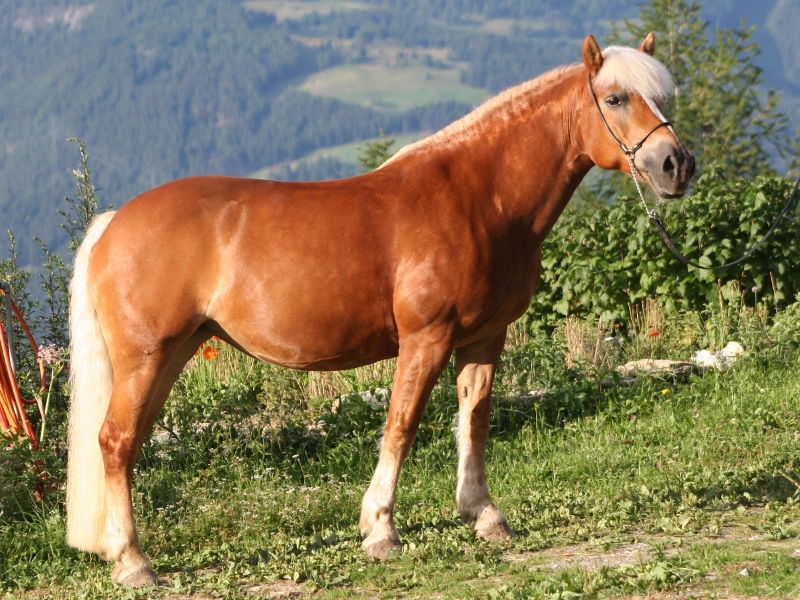
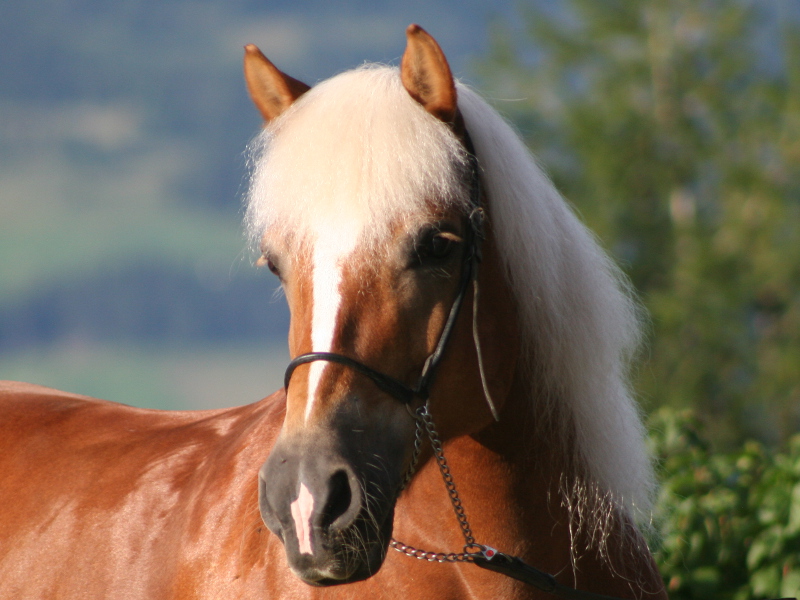
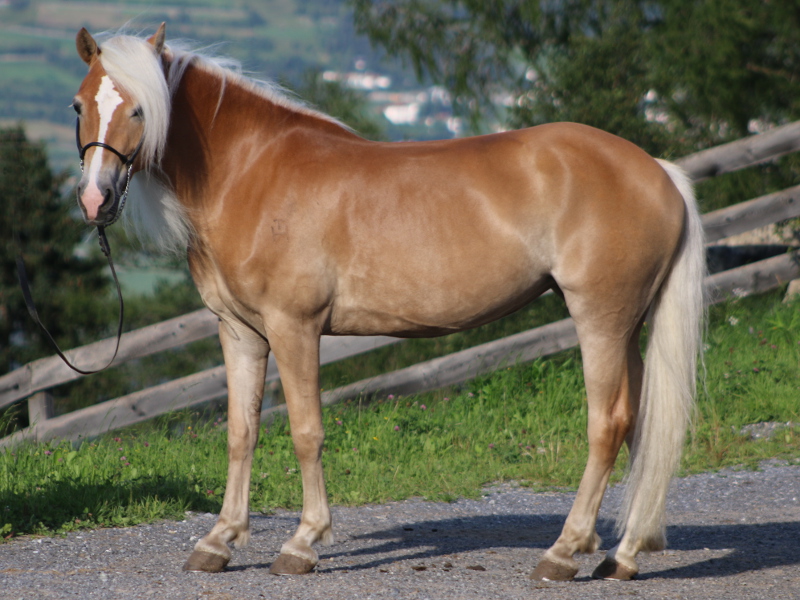
"So, what does that make our Haflinger, then?" I asked the wise Ninjana. Ninjana smiled mischievously and answered: "Well, you see, Netti, we Haflingers are the perfect blend of Nordic and Southern type. Our original great-great-grandmother was a classic mountain mare, a typical Nordic horse as it developed over thousands of years in the Alps. And then there was our original great-great-grandfather, 'El Bedavi,' a true-blooded Arabian — a genuine Southern horse. Out of that pairing, in 1847, came the stallion Folie, who went down in history as the first Haflinger of his kind. And that's why some Haflingers take more after the Nordic type — just look at me — while others lean more toward the Southern type, like our Haigara, for example."
Hm, how interesting … But what type am I, then??? Not a Southern horse, not a Nordic horse … just call me a Plush Horse!!!